Victorian Selective Year 10 Edutest Exam Guide (2028 Entry) | Format & Papers
Practice tests for Melbourne High, MacRob, Nossal and Suzanne Cory are here.
Year 10 Edutest exam for Melbourne High, Mac.Rob, Nossal and Suzanne Cory: format, written expression, and how to apply for 2028 entry. Not the Year 9 ACER paper.
2027 entry results
110 Big Brain students passed the written entrance exam across 6 selective and specialist schools. Every one is listed.
Check out our resultsWant to know where they actually stand? Sit a free diagnostic and get a marked breakdown.
Take the free testPosted by
 Big Brain
Related reading
Melbourne High Practice Tests for the Year 10 Edutest Exam
Year 10 Edutest practice for Melbourne High, the boys' selective school in South Yarra. A free diagnostic and timed papers. Not the Year 9 ACER exam.
MacRob Practice Tests for the Mac.Robertson Edutest Exam
Year 10 Edutest practice for The Mac.Robertson Girls' High School. A free diagnostic and the same five papers as the other Victorian selectives.
Nossal Practice Tests for the Nossal High Edutest Exam
Year 10 Edutest practice for Nossal High School in Berwick. A free diagnostic and timed papers. Not the JMSS science papers.
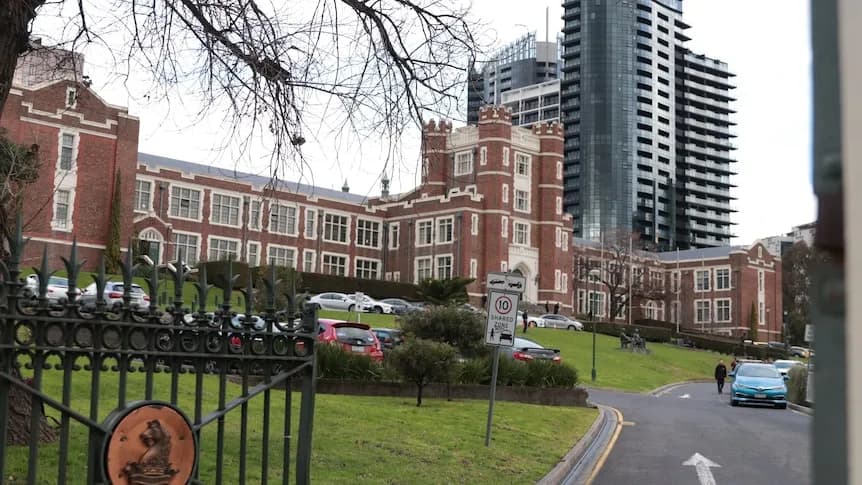
This is the Victorian selective exam guide for 2028 entry: the Year 10 Edutest paper for Melbourne High, Mac.Robertson Girls' High School, Nossal and Suzanne Cory. The Year 9 ACER Selective Entry exam is a separate test. Students in Year 9 now, applying for Year 10 entry, sit Edutest: Mathematics, Numerical Reasoning, Verbal Reasoning, Reading Comprehension and Written Expression. School pages cover the campus; this page covers the exam.
Sit a free diagnostic in the Year 10 Edutest format, then practise the five papers on Big Brain. Start practice at learn.bigbrain.au/join.
Key Exam Information
Entry Points
- Year 10 Entry: Exam usually held in May to June, depending on the school
Application Process
- 1. Exam registration (apply via Edutest)
- 2. Entrance Exam (administered by Edutest)
- 3. Interview (depends on the school)
- Written application
Exam Structure Overview
Year 10 Entry (Current Year 9 Students)
The entrance exam consists of five distinct tests:
| Assessment | Format | Questions | Duration |
|---|---|---|---|
| Mathematics | Multiple Choice | 60 | 30 min |
| Numerical Reasoning | Multiple Choice | 50 | 30 min |
| Verbal Reasoning | Multiple Choice | 60 | 30 min |
| Reading Comprehension | Multiple Choice | 50 | 30 min |
| Written Expression | Written | 2 tasks | 15 min each |
Timed Edutest-style practice for the Victorian Year 10 selective papers. Same start as every other exam on this site. Start practice at learn.bigbrain.au/join.
Types of Exams
- Tests of Ability: measure your potential
- Tests of Achievement: assess your performance
Detailed Test Breakdowns
Mathematics
Multiple Choice | 60 Q | 30 min | Test of Achievement
The Mathematics test assesses year-level maths, plus some harder questions that check how you apply concepts beyond the standard curriculum. Expect Year 6-10 curriculum content.
Topics Covered:
- Basics
- Algebra
- Surds
- Indices
- Equations
- Linear
- Non-linear Relationships
- Pythagoras Theorem
- Trigonometry
- Geometry
- Probability
- Statistics
- Financial Math
- Rates & Proportion
- Measurement
- Kinematics
- Sequences and Series
- Logarithms
Numerical Reasoning
Multiple Choice | 50 Q | 30 min | Test of Ability
Numerical Reasoning tests how you reason with numbers. It rewards problem-solving over memorised knowledge.
Key Components:
- Number Patterns
- Series
- Sequences
- Matrices
- Shapes
- Boxes
- Tables
- Worded Problems
- Time
- Motion
- Financial Math
- Measurement
- Statistics
- Probability
Verbal Reasoning
Multiple Choice | 60 Q | 30 min | Test of Ability
This test assesses how you reason with words and language: vocabulary, word relationships, coding, classification and deduction.
Key Question Types:
- Synonyms
- Antonyms
- Four words alike
- Box words alike
- Foreign language
- Two statements
- Analogies
- Information Deduction
- Syllogisms
- Anagrams
- Rebus
- Word Pyramids
Reading Comprehension
Multiple Choice | 50 Q | 30 min | Test of Achievement
The Reading Comprehension test assesses how you read and interpret written passages, and how you correct, complete and punctuate sentences.
Key Question Types:
- Implied Word
- Sentence Correction
- Truth Statement
- Word Replacement
- Sentence Transformation
- Proverb Inferencing
- Extracts:
- Expository
- Descriptions
- Narratives
- Persuasive
- Articles
- Editorials
- Memoir
- Poetry
Written Expression
Written | 2 tasks | 15 min each, no planning or reading time | Test of Achievement
Students write two pieces, 15 minutes each, with no separate planning or reading time. They do not choose the genre; the exam sets it, most often one of the following:
Creative Text
Students write an original imaginative piece in response to a visual or written prompt, usually as a short story.
Persuasive Text
The exam names a topic, and students take a stance on it in a persuasive essay.
Where to practise
This page covers the exam: papers, timings and application. The drills sit on each school's hub, one page per school, all built on the same five Edutest papers.
- Melbourne High Practice Tests (Melbourne High, South Yarra)
- MacRob Practice Tests (The Mac.Robertson Girls' High School)
- Nossal Practice Tests (Nossal High School, Berwick)
- Suzanne Cory Practice Tests (Suzanne Cory High School, Werribee)
Preparation Checklist
General Preparation
Week Before Exam
Day of Exam
FAQs
Q: How does the Victorian Selective Entry High Schools exam differ from other selective school exams?
A: The exam tests reasoning and general ability more than specific curriculum content.
Q: How much time should I spend preparing?
A: Successful candidates often start 3-6 months before the exam, with several hours a week of timed practice and concept review. Start on Melbourne High Practice Tests, MacRob Practice Tests, Nossal Practice Tests or Suzanne Cory Practice Tests rather than a generic pack.
Q: What's the most challenging part of the exam?
A: Many students struggle with the time limits, particularly in sections with 50 or 60 questions. Regular timed practice builds speed and accuracy.
For the shared Edutest format (practice tests, reasoning patterns, writing timing) see the Edutest exam guide. Official registration is via Edutest. Each school also publishes its own entry notes; start from the school page on this site. Tutoring and class prices are JT Education, not this page.
Note: Exam formats and content may vary year to year. This guide describes practice in the published exam format. It is not a set of past papers, and it is not official marking. For current information, refer to official school and Edutest communications.
Found this useful? Share it with another parent.
 Delivered by JT Education