EBS Edutest Exam Guide (2028 Entry): Elizabeth Blackburn Sciences Format & Practice
Elizabeth Blackburn School of Sciences Year 10 and Year 11 entrance exam: Edutest format, Science Reasoning, study plans, and a free diagnostic. The single EBS exam guide for 2028 entry.
2027 entry results
110 Big Brain students passed the written entrance exam across 6 selective and specialist schools. Every one is listed.
Check out our resultsWant to know where they actually stand? Sit a free diagnostic and get a marked breakdown.
Take the free testPosted by
 Big Brain
Related reading
EBS Interview Day & Post-Exam Checklist
Already sat the Elizabeth Blackburn Sciences written exam? This is the interview-day and post-exam checklist (group tasks, written bioethics, 1:1). For Edutest format and practice, use the EBS exam guide.
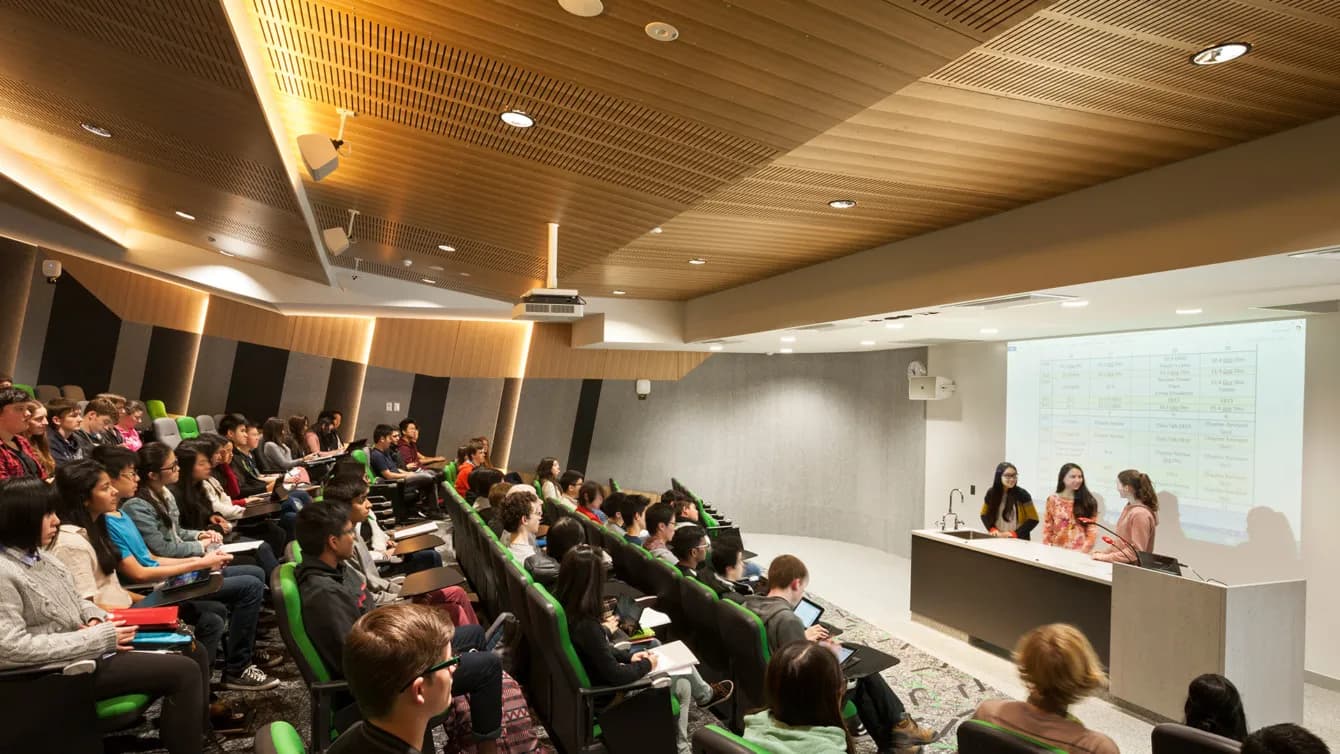
This is the Elizabeth Blackburn Sciences exam guide for 2028 entry. Current Year 10 and Year 11 students sit an Edutest paper at The University High School: Mathematics, Science Reasoning, Verbal Reasoning and Reading Comprehension. Use this page for format, practice and study plans. For interview day after a shortlist, use the EBS interview and post-exam checklist.
Sit a free diagnostic in the EBS Edutest format, then practise the four papers on Big Brain. Start practice at learn.bigbrain.au/join.
Key Exam Information
Entry Points
- Year 11 Entry: For current Year 10 students
- Year 12 Entry: For current Year 11 students
Important Note: There is only one intake per year for entrance into the following academic year.
Application Process
- 1. Exam registration (apply via Edutest)
- 2. Entrance Exam (administered by Edutest)
- 3. Interview Day (for shortlisted applicants)
- Group Activities
- Individual Interviews
For detailed information on the application process, visit the official University High School website.
Exam Structure Overview
The entrance exam is made up of four multiple-choice tests. Details may vary, but the general structure is:
| Assessment | Format | Questions | Duration |
|---|---|---|---|
| Mathematics | Multiple Choice | 60 | 30 min |
| Science Reasoning | Multiple Choice | 30 | 30 min |
| Verbal Reasoning | Multiple Choice | 60 | 30 min |
| Reading Comprehension | Multiple Choice | 50 | 30 min |
Note: The exact number of questions per section may vary. Manage your time carefully in each test.
Timed Edutest-style practice for the EBS papers. Same start as every other exam on this site. Start practice at learn.bigbrain.au/join.
Detailed Test Breakdowns
Mathematics
Multiple Choice | 60 Q | 30 min | Test of Achievement
The Mathematics test assesses year-level mathematical knowledge, plus some harder questions that check how well you apply concepts beyond the standard curriculum. Expect mostly Year 6-10 curriculum content.
Topics Covered:
- Basics
- Algebra
- Surds
- Indices
- Equations
- Linear
- Non-linear Relationships
- Pythagoras Theorem
- Trigonometry
- Geometry
- Probability
- Statistics
- Financial Math
- Rates & Proportion
- Measurement
- Kinematics
- Sequences and Series
- Logarithms
Science Reasoning
Multiple Choice | 30 Q | 30 min | Test of Ability
Science Reasoning assesses your observational, analytical, and problem-solving skills in a scientific context.
Topics:
- Biology
- a. Cells
- b. Body Systems
- c. Diseases
- d. Ecosystems
- e. Evolution
- f. Genetics
- Chemistry
- a. Atoms
- b. Periodic Table
- c. Reactions
- d. States of Matter
- Physics
- a. Forces
- b. Kinematics
- c. Mechanics
- d. Electricity
- e. Energy
- Astronomy
- a. Scale
- b. Planets
- c. Orbit
- d. Satellites
- e. Time
- Geology
- a. Plate Tectonics
- b. Rock Types
- c. Moh's Hardness Scale
- d. Cartography
- Experiments
- a. Variables
- b. Conclusions
Question Types
- Drawing Conclusions
- Graph Analysis
- Table Analysis
- Estimation/Scale
- Flow Charts
- Contour Lines
- Cross Sections
- Science Equations
Verbal Reasoning
Multiple Choice | 60 Q | 30 min | Test of Ability
This test assesses your ability to think and reason using words and language. Vocabulary, word relationships, coding, classification and deduction are assessed.
Key Question Types:
- Synonyms
- Antonyms
- Four words alike
- Box words alike
- Foreign language
- Two statements
- Analogies
- Information Deduction
- Syllogisms
- Anagrams
- Rebus
- Word Pyramids
Reading Comprehension
Multiple Choice | 50 Q | 30 min | Test of Achievement
The Reading Comprehension test assesses your capacity to read and interpret meaning from written passages, as well as correct, complete and punctuate sentences.
Key Question Types:
- Implied Word
- Sentence Correction
- Truth Statement
- Word Replacement
- Sentence Transformation
- Proverb Inferencing
- Extracts:
- Expository
- Descriptions
- Narratives
- Persuasive
- Articles
- Editorials
- Memoir
- Poetry
Preparation Checklist
General Preparation
Week Before Exam
Day of Exam
Study plans (12, 6, 3, 2 and 1 month)
EBS is research-driven, and the Science Reasoning paper rewards students who can read and judge evidence. The other three papers are standard Edutest; see the Edutest exam guide for Verbal Reasoning and Reading Comprehension drill. JMSS uses a different science split; do not assume that paper applies here. Use the JMSS exam guide and JMSS Practice Tests if you are sitting both.
- 12 months: Year-level maths and wide reading. Make graphs and data tables a weekly habit. Official dates stay on the University High School EBS page.
- 6 months: Variables, fair tests, and "does this data support the claim?" Drill Verbal Reasoning weekly, since it is the paper students skip.
- 3 months: Timed sections across all four papers. Target weak sub-skills instead of repeating what you already mark well.
- 2 months: Full mocks in order, strict timing. Keep an error log.
- 1 month: Consolidate. If you are shortlisted, switch to the interview-day checklist. Interview day has no Edutest paper.
FAQs
Q: How does the EBS exam differ from other selective school exams?
A: The EBS exam, administered by Edutest, focuses on scientific aptitude and communication, mathematics and English skills. No other school uses this combination of assessments.
Q: How much time should I spend preparing?
A: Successful candidates often begin preparing 3-6 months before the exam, dedicating several hours per week to practice tests and concept review.
Q: What is the most challenging part of the exam?
A: Many students find the time pressure challenging, particularly in sections like Mathematics and Numerical Reasoning. Regular timed practice builds speed and accuracy.
Note: Exam formats and content may vary year to year. This guide is based on available information and student experiences. For the latest information, check official EBS communications.
Found this useful? Share it with another parent.
 Delivered by JT Education