Creative Writing Tips for Victorian Selective & Scholarship Exams
Creative writing for Victorian selective entry (Melbourne High, Mac.Rob, Suzanne Cory) and for scholarship exams. The two are different papers. Structure, grammar, and the mistakes that cost marks.
2027 entry results
110 Big Brain students passed the written entrance exam across 6 selective and specialist schools. Every one is listed.
Check out our resultsWant to know where they actually stand? Sit a free diagnostic and get a marked breakdown.
Take the free testPosted by
 Big Brain
Related reading
Melbourne High Practice Tests for the Year 10 Edutest Exam
Year 10 Edutest practice for Melbourne High, the boys' selective school in South Yarra. A free diagnostic and timed papers. Not the Year 9 ACER exam.
MacRob Practice Tests for the Mac.Robertson Edutest Exam
Year 10 Edutest practice for The Mac.Robertson Girls' High School. A free diagnostic and the same five papers as the other Victorian selectives.
Nossal Practice Tests for the Nossal High Edutest Exam
Year 10 Edutest practice for Nossal High School in Berwick. A free diagnostic and timed papers. Not the JMSS science papers.

Selective entry and scholarship sittings are different exams, and this guide covers writing for both. If you're aiming for Melbourne High, Mac.Rob, or Suzanne Cory, the creative writing section can be a major challenge. Many students struggle to come up with ideas, write consistently, or keep their writing engaging. With a few strategies and a clear structure, you can produce strong writing under time pressure. Time limits differ: selective entry exams give you 20 minutes, while scholarship exams vary by school.
What is Creative Writing in Victorian Selective Entry and Scholarship Exams?
In the selective entry exam, creative writing (also called narrative writing) asks you to craft a story based on a given prompt and image. For example, the prompt might be:
While exploring an old, forgotten attic in your grandmother's house, you stumble upon a dusty, intricately designed lantern. As you wipe off the layers of dust, the lantern suddenly flickers to life, casting shimmering light all around. To your astonishment, you see glimpses of a magical world within the light, filled with fantastical creatures and lush landscapes...
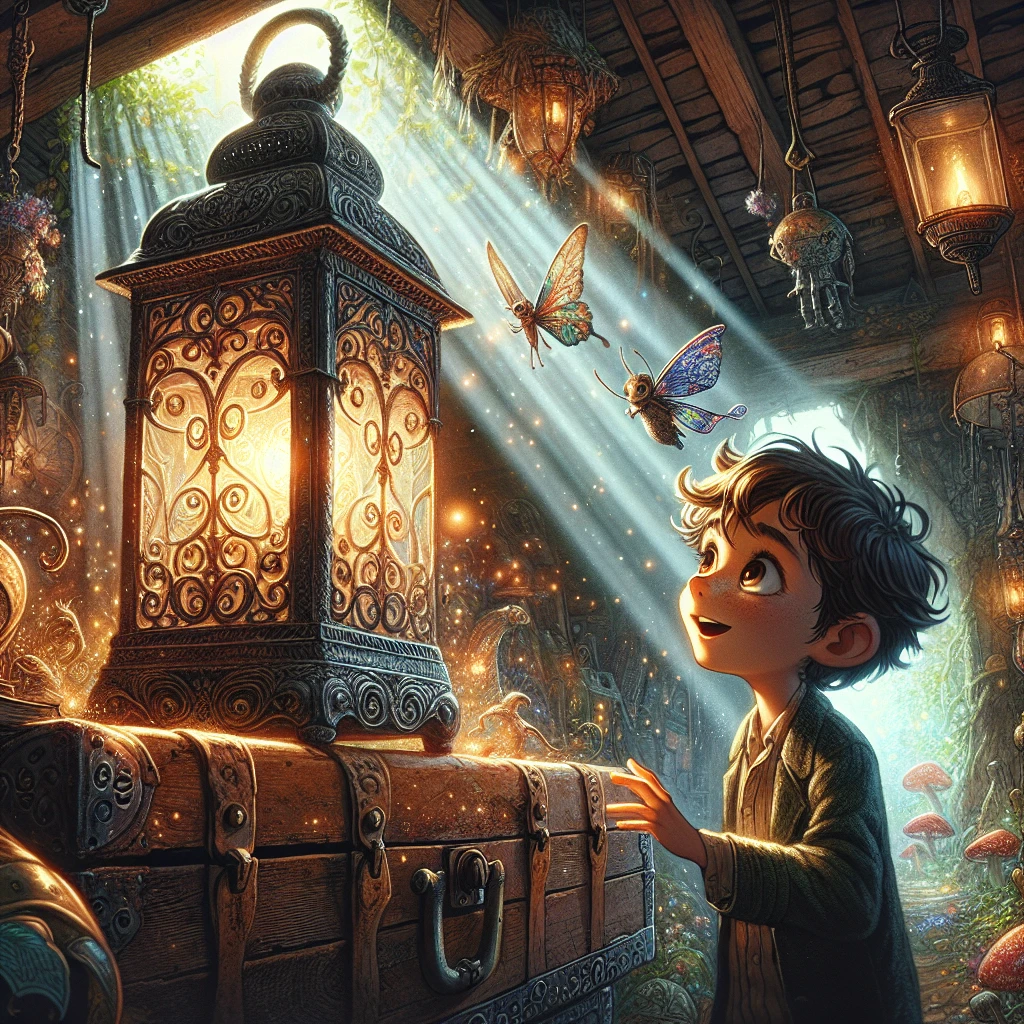
Write a story about what happens when you decide to place your hand into the light of the lantern. What adventures and challenges await you in this vibrant new world?
Every good story needs a character and a problem the character has to face. Without a problem, you have a sequence of events rather than a story.
Why is the Problem So Important?
Compare these two openings:
- Without a problem: "I woke up in a wild forest. I walked around and found a big rock. Then I went home." Nothing is at stake, so the reader has no reason to keep going.
- With a problem: "As you touch the lantern, you are pulled into a magical world, where a looming darkness begins to spread. It is a malevolent force that slowly consumes the vibrant landscape, turning lush forests into barren wastelands. Its source remained a mystery, leaving you to uncover the truth." The dark force and the mystery of its source give the reader a reason to read on.
Give your character a problem first. Build every piece of creative writing for the selective exam on that.
How to Structure Your Creative Writing: A Proven Method
A clear structure helps you produce a focused and engaging story in a limited amount of time. Use this 5-paragraph structure:
- Paragraph 1: Introduce the Problem. Open with your character facing a problem. This paragraph should grab the reader's attention and set the tone for your story.
Example: You go to your regular fish and chip shop, but today it's mysteriously closed. Inside, the shop seems disturbed: a fish on the floor, chips scattered around. Something isn't right. - Paragraph 2: Develop the Character and Setting. Give background on the character and the setting, so the reader understands the situation.
Example: Jenny has been visiting this fish and chip shop every week for years. She knows the owner, Mr. Collins, who always ensures the shop is spotless. But today, everything seems off, and Jenny begins to worry. - Paragraph 3: Make the Problem Worse. Whatever was troubling the character in the first paragraph should escalate here.
Example: Jenny notices even more signs that something has gone wrong: glasses on the countertop, broken glass on the floor. Things are getting worse by the minute. - Paragraph 4: The "Almost Solution". Let the reader think the problem is about to be solved, then pull back at the last moment so the situation gets more intense.
Example: Jenny sees a light on in the storage room and thinks she's found Mr. Collins. She breathes a sigh of relief. But when she opens the door, no one is there. The problem is even more unsolvable than before. - Paragraph 5: The Climax. End the story at its most intense point. The problem can stay unresolved, as long as the reader is left wondering what happens next.
Example: Jenny heads upstairs to Mr. Collins' room, but when she opens the door, her jaw drops. What will she find? The story ends here, leaving the reader on edge.
Each paragraph raises the tension a little further, which carries the reader through to the climax.
How to Make Your Story More Engaging
A simple, well-structured story will get you far. To stand out, work on these techniques:
- Sensory Imagery: Instead of writing "the town was busy," show it: "the town buzzed with laughter and adventure." The reader can picture the scene.
- Character Development: Help the reader connect with your character, so they care about what happens to your protagonist.
- Advanced Vocabulary and Expression: Use precise words and vary your sentence structure so your writing flows.
Time Management: How to Write in 20 Minutes
You have 20 minutes to write your story. Split them like this:
- Planning (3 minutes): Spend the first 3 minutes outlining your story. Decide the problem, the character, and how the story will unfold. Write brief notes for each paragraph so the writing goes faster.
- Writing (15 minutes): Write from your outline. Don't aim for perfect at this stage. Get your ideas down clearly and quickly.
- Editing (2 minutes): Use the last few minutes to edit. Read your writing aloud in your head to catch awkward sentences and punctuation errors.
Final Tips for Success
- Practice: Write a timed story to a new prompt each week, using the 3/15/2 split above, until planning in 3 minutes feels routine.
- Get Feedback: Ask a teacher, tutor or parent to read your story and tell you where they lost interest or got confused.
- Start Simple: Get the 5-paragraph structure right before you add imagery and advanced vocabulary.
Conclusion
The creative writing section can feel daunting, but structure and practice make it manageable. Give your character a compelling problem, build the story through a clear beginning, middle and climax, and practise regularly.
Good luck with your writing!
Found this useful? Share it with another parent.
 Delivered by JT Education