How to Prepare for the EBS Entrance Exam: 12, 6, 3, 2 & 1-Month Study Plans
A complete preparation roadmap for the Elizabeth Blackburn School of Sciences entrance exam: the Edutest core papers plus the Science Reasoning component that defines EBS. Month-by-month plans, strategies, and pitfalls.
2027 entry results
110 BigBrain students passed the written entrance exam across 6 selective and specialist schools. Every one is listed.
Check out our resultsWant to know where they actually stand? Sit a free diagnostic and get a marked breakdown.
Take the free testPosted by
 Big Brain
Related reading
Looking to join Elizabeth Blackburn Sciences? Get a comprehensive breakdown of the EBS entrance exam, including exam structure, preparation tips, and a detailed checklist to help you succeed. Written by experienced tutors who have guided hundreds of students.
EBS Post Exam Preparation Tips
Gaining entry into the prestigious Elizabeth Blackburn School of Sciences (EBS) is competitive but rewarding. This guide covers the post-exam preparation process, from interviews to group activities, and explores the key areas students need to focus on to stand out.
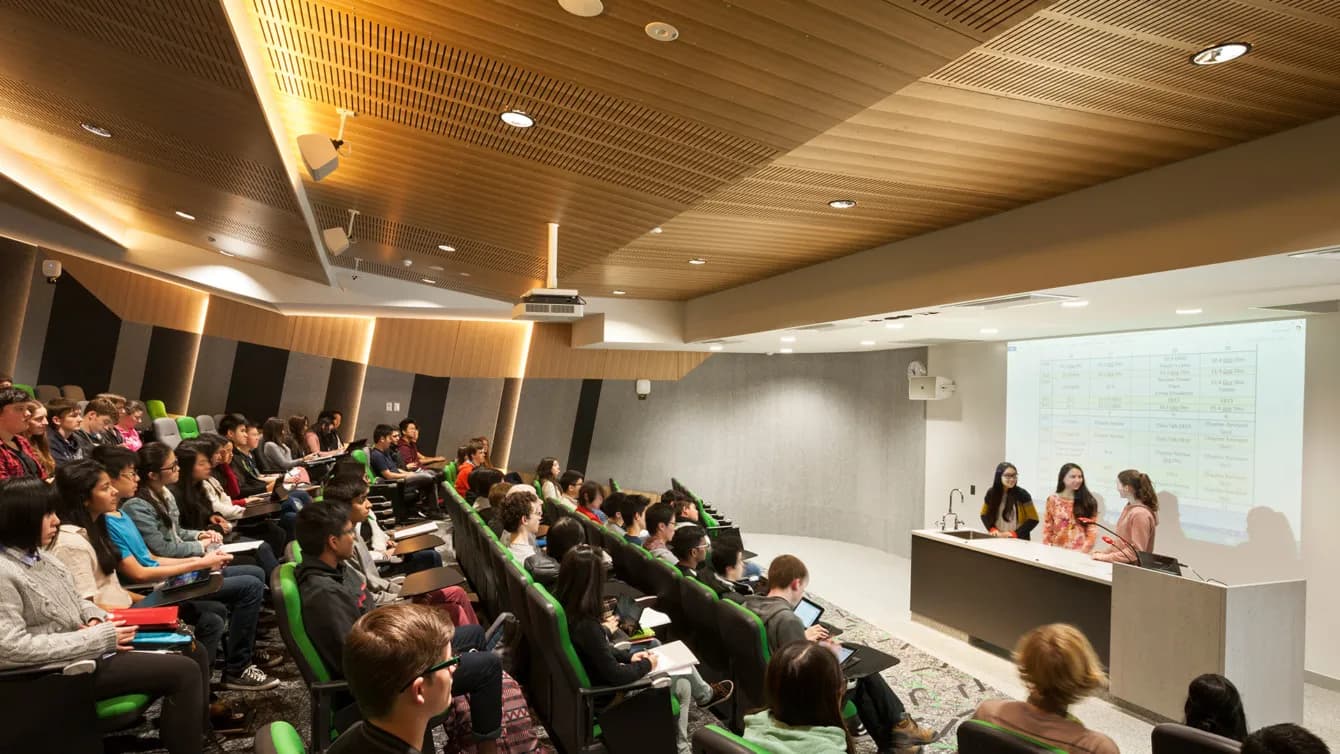
The Elizabeth Blackburn School of Sciences (EBS) is one of Victoria's most distinctive academic destinations: a specialist science school that accepts students at both Year 10 and Year 11 through an Edutest-style entrance exam. If your child loves asking questions, designing experiments, and figuring out how the world actually works, EBS is the kind of place where that curiosity is treated as a serious academic strength rather than a distraction. But getting in is genuinely competitive, and the exam rewards a particular kind of thinker.
What makes EBS different from a standard selective school is its identity. EBS is research-driven. It is built around scientific literacy, the scientific method, and the ability to look at a piece of evidence and work out what it does and does not show. Students at EBS go on to undertake genuine research projects, so the entrance exam is, at heart, looking for young people who can reason like scientists, not just recall facts like an encyclopaedia. This guide walks you through exactly what the exam assesses and gives you five concrete preparation plans, from a relaxed twelve-month build all the way down to a focused final month.
One important note before you begin. If you are also considering the John Monash Science School (JMSS), be aware that the two exams have a different emphasis and a different science structure, so do not assume preparation for one automatically covers the other. We have a separate JMSS guide that breaks down its particular format.
When Should You Start Preparing?
The honest answer is that the best preparation for EBS is not last-minute cramming, because scientific literacy is something that grows slowly. A student who has spent six to twelve months reading widely about science and getting properly comfortable with graphs and data will walk into the exam with a depth that is very hard to fake. That longer runway is the ideal, and it is genuinely the strongest position to be in.
That said, you are not out of the running if you are starting later. A focused eight to twelve week plan can sharpen exam technique dramatically: timing, question familiarity, and the habit of judging evidence quickly under pressure. Plenty of successful candidates have prepared in a concentrated burst. Be honest about how much time you actually have, then follow the plan that matches it. Below, each timeframe links to a distinct study plan, so feel free to jump straight to the one that fits your situation: twelve months, six months, three months, two months, or one month out.
The EBS Exam at a Glance
The EBS entrance exam follows an Edutest-style format: four multiple-choice tests of 30 minutes each. Both the Year 10 and Year 11 entry points use the same exam format; the difference is that Year 11 entry expects stronger foundations, since those students are joining a year deeper into their secondary schooling. The same research-driven ethos runs through every component. The school wants evidence that you can think scientifically, not just answer quickly.
| Component | What it tests |
|---|---|
| Mathematics | 60 questions in 30 minutes. Mathematical reasoning and problem solving at, and slightly above, year level. Expect questions that require applying concepts rather than simply recalling procedures. |
| Science Reasoning | 30 questions in 30 minutes, and the only paper unique to EBS. Scientific literacy in action: interpreting data and graphs, weighing evidence, applying the scientific method, and drawing sound conclusions from unfamiliar experiments. |
| Verbal Reasoning | 60 questions in 30 minutes, so roughly half a minute each: word relationships, analogies and logic puzzles. The component students least expect, and the one where practice pays back fastest. |
| Reading Comprehension | 60 questions in 30 minutes. Reading and analysing written passages, retrieving information, interpreting meaning, and evaluating ideas. |
Note what is not there: no writing task. Every component is multiple choice, and only Science Reasoning is specific to EBS. The other three are the standard Edutest papers that selective-school candidates sit everywhere. Science Reasoning is where the research-driven fingerprint shows. The exam is less interested in whether you have memorised the parts of a cell and more interested in whether, given a fresh experiment and a set of results, you can spot the variables and tell a justified conclusion from an overreaching one. Keep that lens in mind as you work through the plans below.
12 Months Out: Build Strong Foundations
With a full year ahead of you, spend it building the underlying capabilities the exam later measures rather than drilling papers. Invest in breadth and depth now, so that when you move into focused practice later, the technique sits on top of genuine understanding rather than papering over gaps.
Start with two pillars: solid mathematics at year level, and strong general literacy. Shore up any wobbly maths topics now, while there is no time pressure, and keep reading challenging material so that comprehension and vocabulary develop naturally. Alongside that, deliberately grow your scientific literacy. This is the single biggest differentiator for EBS, and it cannot be rushed in the final weeks.
Make science part of everyday life. Read popular science books and articles, follow science news, watch good documentaries, and do simple experiments at home where you actually record observations. The aim is to become comfortable with the language and logic of science, and especially to become fluent at reading graphs, tables, and data, since interpreting evidence is at the heart of the exam.
- Consolidate year-level maths and fix any foundational gaps without time pressure.
- Read widely every week: popular science, quality news, and a range of genres for comprehension.
- Build a habit of reading and interpreting graphs, charts, and data tables.
- Do small hands-on experiments at home and write down what you observe.
- Keep a vocabulary and curiosity notebook for new words and interesting science ideas.
6 Months Out: Strengthen Scientific Reasoning
By the six-month mark, your foundations should be solid enough that you can start sharpening the specific reasoning skills EBS prizes. This is where you move from general scientific curiosity towards the disciplined methodology that the Science Reasoning section rewards.
Focus on the machinery of the scientific method. Make sure you can confidently identify independent, dependent, and controlled variables, recognise what makes a fair test, and spot when an experiment's design undermines its conclusion. Practise evaluating evidence: is this claim actually supported by the data, or is the sample too small, the graph misleading, or the conclusion overreaching? These are exactly the judgement calls the exam asks you to make.
At the same time, start the three Edutest-core papers properly: Mathematics, Reading Comprehension and Verbal Reasoning. Verbal Reasoning is the one students underrate: 60 questions in 30 minutes of analogies, word relationships and logic. It is almost pure pattern recognition, so it improves fast with regular practice. Get the question styles and timing familiar long before exam day.
- Master variables, fair tests, and experimental design until they are second nature.
- Practise evaluating evidence: does the data actually support the conclusion?
- Drill Verbal Reasoning weekly: analogies and word logic improve fastest with reps.
- Begin Edutest-core practice papers to learn the question styles and pacing.
- Review every practice paper and note recurring reasoning errors.
3 Months Out: Intensive Timed Practice
Three months out, the emphasis shifts decisively towards intensive, timed practice across all four components. Knowledge alone is no longer the bottleneck; the challenge now is applying it accurately under the clock. Build a regular rhythm of full timed sections so that working at exam pace becomes normal rather than stressful.
Lean hard into science-literacy tasks and challenge-level scientific-analysis questions. Seek out problems that hand you an unfamiliar dataset or experiment and ask you to interpret it, because that transfer skill, reasoning about something you have never seen before, is what separates strong EBS candidates from the rest. Do not shy away from the harder material; it is where the biggest gains live.
Use analytics to target your weak areas. Rather than vaguely doing more practice, look at which sub-skills you keep dropping marks on, whether that is graph interpretation, a specific maths topic, or a class of verbal analogy, and pour your time there. Precise, data-driven revision in this window is far more powerful than generic effort.
- Run frequent timed sections across maths, science reasoning, verbal reasoning and reading.
- Prioritise challenge-level scientific-analysis and data-interpretation questions.
- Practise reasoning about unfamiliar experiments and datasets.
- Use sub-skill analytics to find and attack your weakest areas specifically.
- Re-test weak topics after revising them to confirm real improvement.
2 Months Out: Full Mock Exams
With two months to go, the centrepiece of your preparation should be full mock exams sat under realistic conditions. Replicate the real thing as closely as you can: the full set of sections in order, strict timing, a quiet space, and no interruptions. The goal is to build the stamina and composure to perform across the entire exam, not just in isolated bursts.
Within those mocks, keep sharpening the EBS-specific muscle of analysing unfamiliar data and experiments. Each mock will surface fresh scenarios, and how you handle the ones you did not expect is exactly what the exam is testing. Pair this with strict pacing practice (roughly 30 seconds a question on Verbal Reasoning, Reading Comprehension and Mathematics, a full minute on Science Reasoning) so you learn when to commit to an answer and move on.
Keep a detailed error log throughout this phase. After every mock, record not just which questions you got wrong but why, whether it was a misread, a timing slip, a knowledge gap, or a reasoning error. Reviewing that log is often the highest-value hour of the week, because it turns your mistakes into a targeted to-do list.
- Sit full mock exams under real conditions, with correct order and strict timing.
- Practise analysing unfamiliar data and experiments within each mock.
- Keep an error log: record what you got wrong and, crucially, why.
- Rehearse your per-question pacing so no section overruns its 30 minutes.
- Review your error log weekly and convert it into a focused revision list.
1 Month Out: Consolidate and Refine
The final month is about consolidation, not new content. Resist the temptation to cram an entirely new topic now; the marginal gain is small and the risk to your confidence is high. Instead, reinforce what you already know and keep your technique warm. Light daily practice, a couple of focused sections rather than marathon sessions, keeps you sharp without burning you out before the day that matters.
Use this window to lock in your exam-day routine. Practise at the same time of day as the real exam, settle on your pacing strategy for each section, and rehearse what you will do when a question stumps you, namely move on and come back. Address nerves directly: simple breathing techniques, a positive self-talk script, and the reassurance that comes from knowing you have prepared well all help convert anxiety into focus.
If you are a late starter and the month ahead is all you have, do not panic. A realistic crash plan still works: prioritise the highest-yield areas, which for EBS means science reasoning and data interpretation, do a handful of timed sections to build familiarity, and drill a short Verbal Reasoning set each day. You will not master everything in four weeks, but you can absolutely walk in calm, familiar with the format, and ready to show how you think.
- Consolidate existing knowledge rather than starting new topics.
- Do light, focused daily practice to stay sharp without burning out.
- Lock in an exam-day routine: pacing, when to skip, and when to return.
- Manage nerves with breathing, positive self-talk, and good preparation.
- Late starter? Crash-prioritise science reasoning, data interpretation, and verbal reasoning speed.
Exam Week: Practical Tips
In the final week, how you look after yourself matters as much as anything you study. Aim for consistent, full nights of sleep across the whole week rather than one big sleep the night before, since accumulated rest is what keeps your reasoning sharp. Eat normally and well, and on exam morning have a balanced breakfast that includes some protein and slow-release energy rather than just sugar that spikes and crashes.
Prepare everything you need the night before so the morning is calm. Check exactly what the exam requires, but typically that means identification, any admission or registration details, permitted stationery such as pencils, pens, and an eraser, and a water bottle. Know where the venue is and plan to arrive early, allowing buffer time for traffic or public transport hiccups so you are settled rather than rushed.
On the day itself, pace yourself deliberately. Read each set of instructions carefully, keep an eye on the clock so no single section eats your time, and if a question stalls you, mark it, move on, and return with fresh eyes. A steady, even rhythm almost always beats racing and second-guessing.
Study Strategies That Actually Work
Not all study is equally effective, and the strategies with the strongest evidence behind them are the ones worth your time. Active recall, the practice of testing yourself rather than re-reading notes, forces your brain to retrieve information and dramatically strengthens memory. Whenever you finish a topic, close the book and try to explain or reproduce it from scratch.
Pair that with spaced repetition: revisit material at increasing intervals rather than in one block. Reviewing a concept after a day, then a few days, then a week, cements it far more durably than cramming. Combine these with regular timed practice so that working under pressure feels routine, and the exam clock stops being a source of panic.
Just as important is what you do with your mistakes. Reviewing errors deliberately, asking why you got something wrong and how to avoid it next time, is where real improvement happens. And for EBS specifically, keep reading widely about science. Every popular-science article, every dataset you puzzle over, builds the scientific literacy that the exam is ultimately designed to reward.
- Use active recall: test yourself instead of passively re-reading.
- Apply spaced repetition by revisiting topics at increasing intervals.
- Build timed-practice habits so working under the clock feels normal.
- Review every mistake and understand why it happened.
- Read widely about science to deepen genuine scientific literacy.
Common Mistakes to Avoid
A handful of avoidable mistakes trip up otherwise capable students every year. The most common is simply starting too late and trying to compress a year's worth of literacy growth into a fortnight of cramming. The second is memorising facts at the expense of reasoning, which is a particularly costly error for EBS, where the exam cares far more about how you think through evidence than about how many definitions you can recite.
Another frequent slip is treating Verbal Reasoning as filler. It is a full quarter of the exam, it is the paper least like schoolwork, and it is the one that responds fastest to practice. Equally, do not let your enthusiasm for science crowd out the maths and reading papers, which carry the same weight as everything else.
Finally, avoid two specific traps. Do not assume EBS uses the same format as JMSS; the two exams differ in emphasis, so prepare for the one you are actually sitting and check our JMSS guide if you are considering both. And do not push so hard that you burn out before exam day, since a rested, confident candidate consistently outperforms an exhausted one.
- Starting too late and relying on last-minute cramming.
- Memorising facts instead of building genuine scientific reasoning.
- Treating Verbal Reasoning as filler when it is a quarter of the exam.
- Ignoring core maths and reading in favour of science alone.
- Assuming EBS uses the same format as JMSS.
- Over-studying to the point of burnout before the exam.
Start Your EBS Prep with Big Brain
Wherever you are on the timeline, the best next step is to find out exactly where you stand. Begin with our free diagnostic test to pinpoint your strengths and the sub-skills worth targeting, then use the Big Brain platform for unlimited practice across every EBS component, with sub-skill analytics that show you precisely where to focus so no study session is wasted. When you are ready to learn more about the assessment itself, our dedicated EBS entrance exam page walks through the details. Start early, get used to reasoning like a scientist, and let the data tell you where your hours are best spent.
 Delivered by JT Education